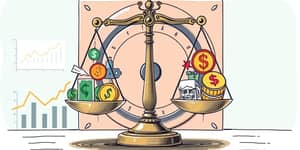
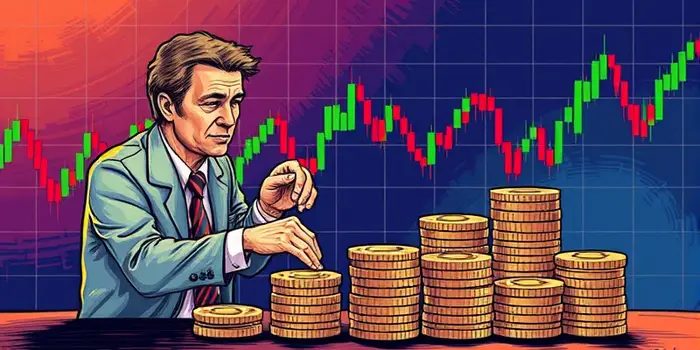
Market ups and downs can leave even seasoned investors feeling anxious and uncertain. A sudden market dip can trigger regret, while a steep climb may spark the fear of missing out. But what if there was a way to transform this roller coaster into a smoother pathway? Dollar-cost averaging offers a disciplined, methodical approach that harnesses both market peaks and valleys to an investor’s advantage. By dividing investments into equal portions over time, this strategy seeks to minimize emotional reactions to sudden shifts and build a robust portfolio steadily.
This strategy resonates with the core human desire for predictability and control in an unpredictable world. Instead of obsessing over economic indicators, political news, or quarterly earnings reports, investors focus on a schedule and a plan. For those who have watched a lump-sum investment shrink in value overnight, DCA can feel like a comforting, steady path through market turbulence—a way to participate in growth without battling their own impulses every day.
What Is Dollar-Cost Averaging?
Dollar-cost averaging, often abbreviated as DCA, is a strategy in which an investor commits to putting a fixed sum of money into an investment at regular intervals—monthly, quarterly, or even weekly—regardless of the asset’s current price. Instead of worrying about optimal entry points or timing the market, investors let time and consistency work on their side. Over extended periods, DCA can help to average out purchase prices and smooth returns.
When applied correctly, DCA can also serve as an entry point for those new to investing, removing barriers to participation. Anyone with as little as $50 or $100 can start a plan, bypassing the need to accumulate a large lump sum before getting started. This accessible approach for all budget levels empowers more people to build long-term wealth.
Furthermore, DCA can be automated through employer-sponsored plans like 401(k)s, IRAs, or robo-advisors that allow recurring purchases of ETFs, mutual funds, or individual stocks. This removes manual steps and ensures you never miss a scheduled contribution, reinforcing the disciplined habit that underpins successful long-term investing.
How DCA Works: A Step-by-Step Example
Imagine you have $12,000 to invest. Instead of deploying the full amount at once, you invest $1,000 each month for twelve months. In months when the price is high, your $1,000 buys fewer shares; in months when the price dips, you purchase more. By the end of the year, you may have an average cost per share lower than the starting price, depending on how prices fluctuate.
For example, if share prices over six months are $10, $8, $12, $9, $11, and $7, your $300 monthly contributions would result in acquiring roughly 125 shares through DCA, compared to just 100 shares if you had invested the $1,800 lump sum at $10. That additional 25 shares exemplify how this method can capitalize on market volatility for potential gains.
Markets can shift dramatically: the S&P 500 in 2020 saw nearly 25% of trading days with swings greater than ±3%. In such environments, a one-time investment might buy fewer shares at a higher peak, while DCA ensures your contributions are spread across multiple price points. Over time, these varying entry prices can add up to a lower average cost per share and a more resilient portfolio.
Key Benefits of Dollar-Cost Averaging
Dollar-cost averaging offers a suite of advantages that align with both practical and psychological needs. It provides a systematic framework that helps investors stay on track during turbulent markets, while also fostering long-term habits that prioritize consistency over short-term guesses. Below are some of the most compelling upsides to adopting DCA.
- significantly reduces your timing risk by spreading entries
- smooths out market volatility impact across purchase intervals
- fosters disciplined automated investing habits for consistency
- eliminates emotional traps in investing during downturns
- accessible to investors with small budgets from day one
Potential Drawbacks and Limitations
Although DCA shines in unpredictable or declining markets, it may lag behind lump-sum investing when markets exhibit a strong, unbroken upward trend. If the market is steadily rising, those early funds left on the sidelines earn no growth, potentially resulting in lower overall returns.
In addition to potential underperformance, DCA requires steadfast commitment. Investors must resist the temptation to deviate during rallies or sharp drops. Administrative hurdles, such as transaction fees for each installment, can also erode returns if not managed properly. Ultimately, the approach involves lower long-term returns in bull runs and inherently requires patience and unwavering discipline.
Lastly, DCA may not suit those seeking quick gains in short time frames. If you have a high risk tolerance and believe in a rapidly growing sector, a lump-sum investment might capture more upside. It’s important to weigh your personal objectives and timelines before choosing either approach.
When to Use DCA
Dollar-cost averaging shines brightest under circumstances where uncertainty is high or emotions run hot. It provides an emotional safety net by automating decisions, ensuring that you buy across different market conditions rather than making a single, high-stakes choice. Traders who have endured gut-wrenching swings may find peace of mind in a process that keeps them engaged yet unemotional.
- investing at all-time market highs
- navigating highly volatile market periods
- managing lump-sum inflows like bonuses
- for investors prone to emotional decision-making
Practical Tips for Implementing DCA
Setting up dollar-cost averaging is straightforward, but executing it effectively requires intentional steps. By automating and simplifying the process, you’ll avoid common pitfalls and remain committed, especially when market news tempts you to deviate from the plan. Regular contributions transform investing into a habit rather than a chore.
- set up automatic monthly contributions to maintain consistency without effort
- stick to your schedule regardless of fear and ignore market noise
- review your portfolio allocation periodically to maintain diversification
- consider using employer-sponsored plans or robo-advisors for simplified automation
Comparing DCA to Lump-Sum Investing
Research often indicates that lump-sum investing can outperform DCA over long periods in markets with persistent upward trends, since a larger amount is exposed to growth earlier. Yet the difference in returns may be marginal, while the emotional benefit of avoiding poor timing could be substantial. Investors who time the market poorly may incur losses far greater than any potential performance edge.
In volatile years like 2020, characterized by rapid swings and unexpected economic shocks, DCA has shown its resilience. During that period, employing DCA could result in owning up to fourteen percent more shares than a lump-sum strategy. This phenomenon underscores why DCA is often lauded as an emotional safety net in investing.
Real-World Scenarios and Historical Insights
During the turbulent market swings of early 2020, many investors felt whiplash as prices plunged and then rebounded within weeks. Those using DCA continued contributing unchanged amounts, inadvertently buying low before the rebound and accumulating extra shares. Historical simulations suggest that this approach could yield up to fourteen percent more shares than lump-sum investing during such volatile stretches.
Similarly, backtests over multi-decade periods reveal that markets often exhibit unpredictable streaks of volatility lasting months or years. Investors who steadfastly applied DCA during the dot-com bust, the 2008 financial crisis, and the 2020 pandemic found that their portfolios weathered storms more uniformly, avoiding the peaks and valleys that can stall wealth creation and erode confidence.
Conclusion: Is DCA Right for You?
Dollar-cost averaging is not a silver bullet, but it’s a powerful strategy for managing risk, curbing emotional decision-making, and building wealth steadily over time. Whether you’re a first-time investor or someone who receives irregular bonuses, DCA can transform erratic investing into a reliable habit. By embracing a plan that automatically navigates peaks and valleys, you gain an emotional safety net that reduces regret and fosters enduring financial health.
Ultimately, your choice should align with your goals, temperament, and market outlook. If you value consistency, patience, and a hands-off approach to weathering market storms, dollar-cost averaging may be the ideal tool to make volatility your ally rather than your adversary. Consider giving it a try on your next contribution schedule and witness how time becomes your greatest investment partner.
References
- https://www.gasawayinvestments.com/benefits-of-dollar-cost-averaging
- https://www.home.saxo/learn/guides/trading-strategies/how-dollar-cost-averaging-dca-can-help-during-market-volatility
- https://www.td.com/ca/en/investing/direct-investing/articles/dollar-cost-averaging
- https://www.getecio.com/resources/dollar-cost-averaging-a-strategy-to-help-nonprofits-invest-in-a-volatile-market
- https://www.finra.org/investors/insights/dollar-cost-averaging
- https://www.morganstanley.com/articles/dollar-cost-average-investing-market-essentials
- https://www.schwab.com/learn/story/what-is-dollar-cost-averaging
- https://www.bernstein.com/our-insights/insights/2025/articles/dollar-cost-averaging-is-it-better-to-dive-in-or-dip-your-toes.html
- https://www.fidelity.com/learning-center/trading-investing/dollar-cost-averaging
- https://www.manulifeim.com.hk/en/insights/dollar-cost-averaging.html
- https://www.youtube.com/watch?v=DojGdOFPZyE
- https://www.sunlifeglobalinvestments.com/en/insights/investor-education/saving-for-retirement/The-pros-and-cons-of-dollar-cost-averaging/
- https://www.ml.com/articles/what-is-dollar-cost-averaging.html
- https://www.nysdcp.com/iApp/rsc/learning-library-dollar_cost_averaging.x
- https://www.tiaa.org/public/learn/financial-essentials/dollar-cost-averaging-and-compound-growth-in-retirement-savings